The Kajabi One-on-One Coaching Portal Build
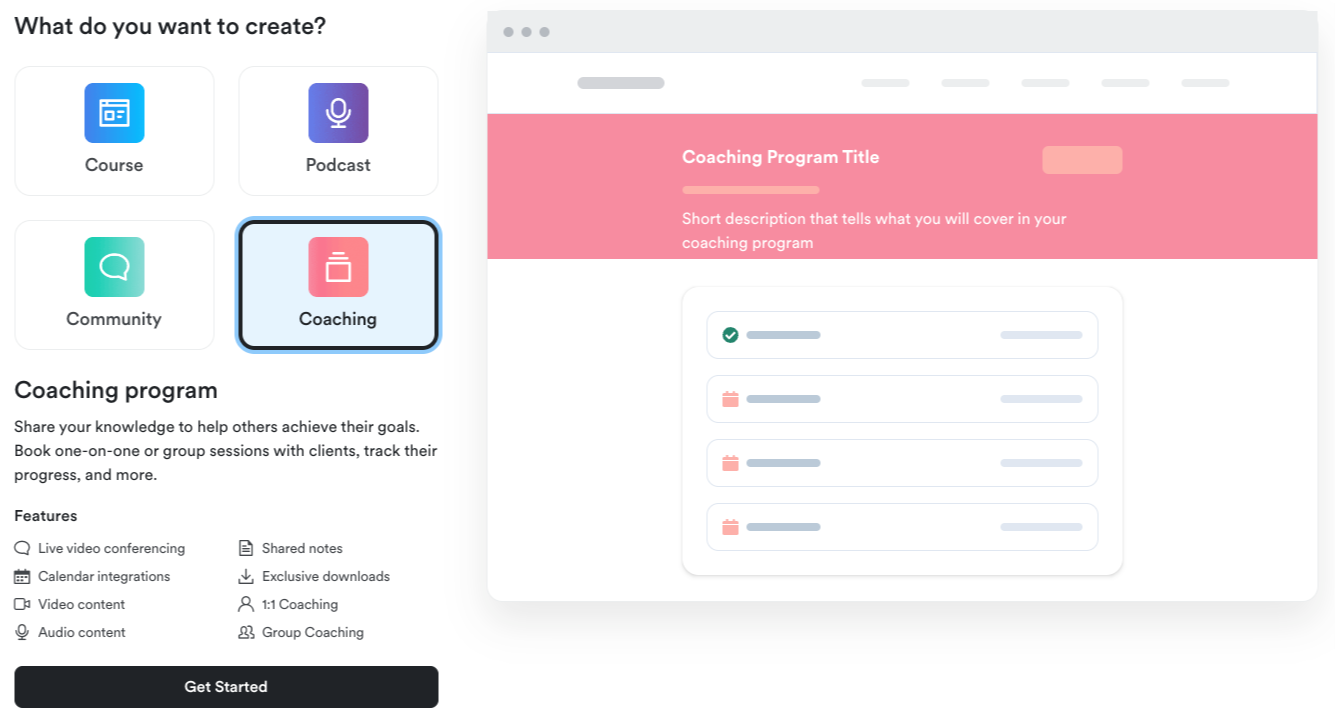
The first thing we build behind every client site is the coaching portal. Not because it is the most visible thing, but because it is the thing that changes how the business owner experiences their own work.
Here is what that looks like in practice.
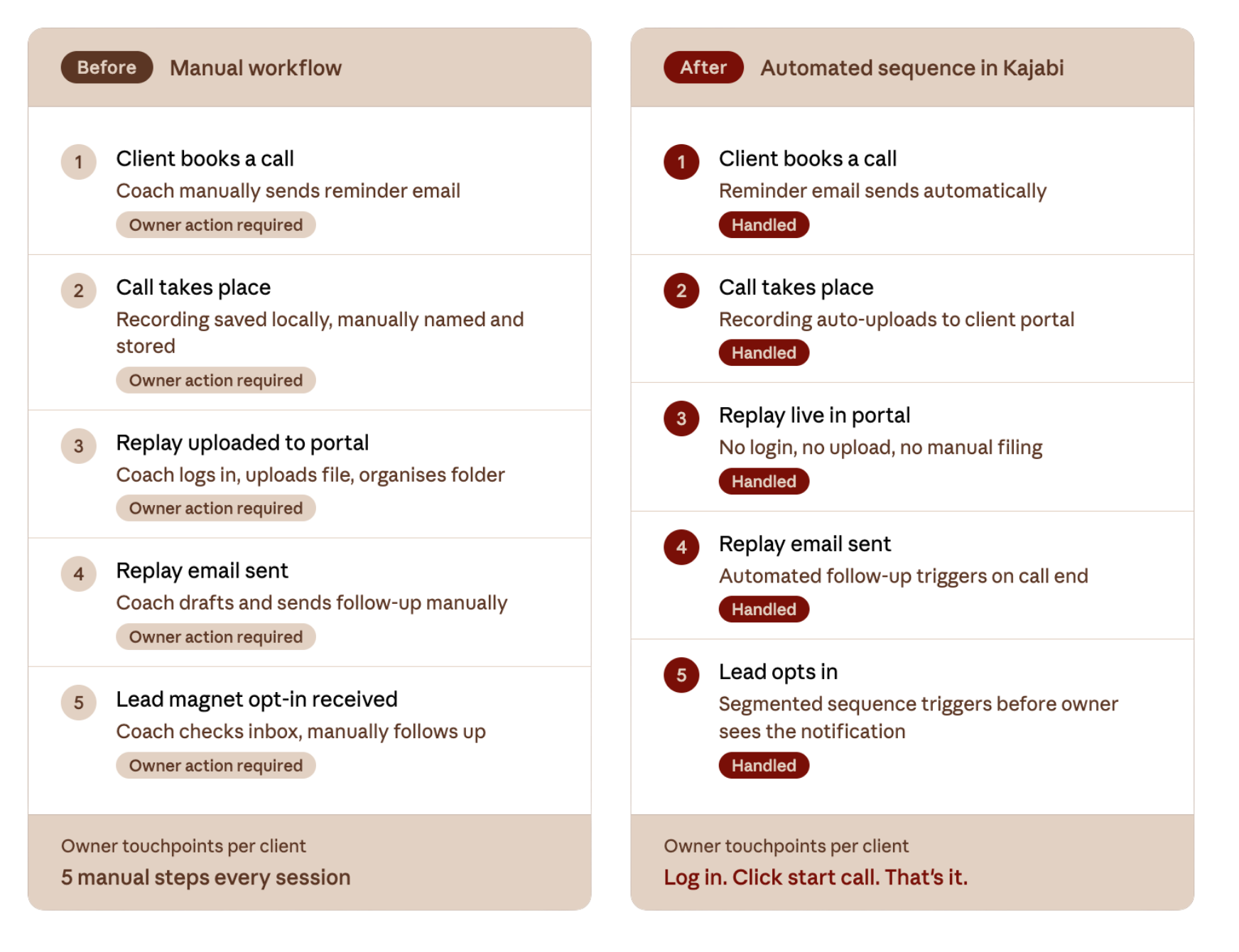
The client logs into their backend and clicks start call. That is it. That is their entire job.
From there, the call records automatically. When it ends, the replay uploads to their portal without anyone having to touch it. The reminder email went out before the call. The replay email goes out after. No manual sending. No inbox monitoring. No chasing.
What this removes from the business owner's workflow is not just time. It is the specific mental weight of having to remember. Being the person who holds the thread between scheduling, showing up, and the client getting what they paid for.
We roll out new systems manually behind the scenes first to test the process. Then we automate it. Because automation without a tested process is just a faster way to do the wrong thing.
The coach's only job is to show up present and do the work they are actually good at.
The Email and Lead Generation Build
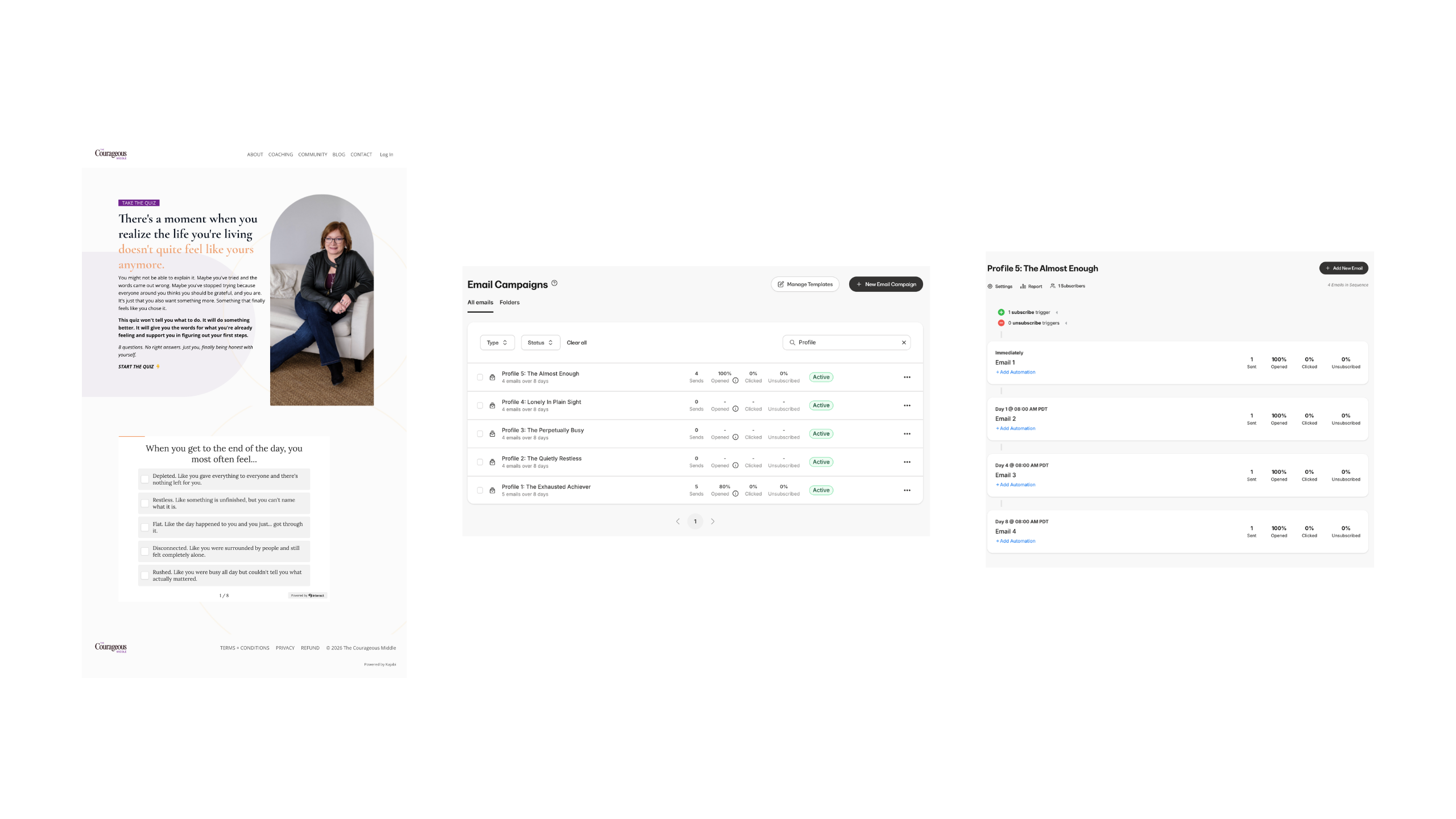
Every site we launched in March has an email opt-in. Not a generic one. A considered entry point that leads somewhere specific.
For each client we built four to seven email sequences, each one moving the subscriber into an offer or their next best step. The follow-up is already running before the business owner even knows someone opted in.
We also built a quiz lead magnet with segmented sequences based on the result. Not one generic funnel but a layered experience that meets each lead where they are. Someone who gets result A receives a sequence written for result A. Someone who gets result B goes somewhere else entirely.
Why does this matter?
Because the business owner does not have to be online for any of it. Someone finds them, opts in, gets a result, receives a sequence tailored to that result, and moves toward an offer. All of it runs without a conversation, without a manual follow-up, without anyone monitoring an inbox at 9pm.
The Application Workflow
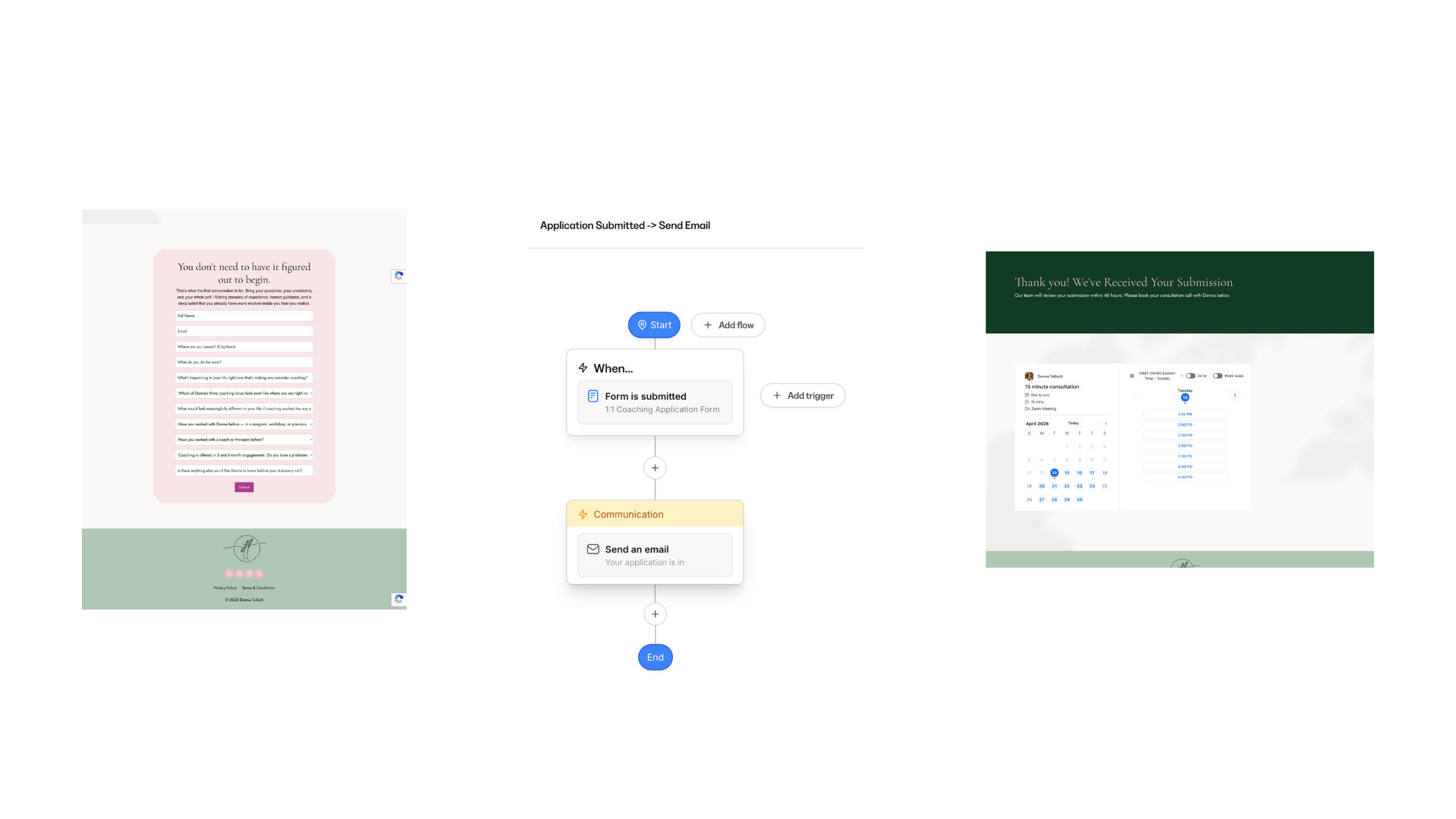
All four sites have automated application workflows.
Someone raises their hand. They fill in an application. The sequence that follows runs without anyone on the receiving end doing anything.
What that means in practice: clients are applying for publishing support, consulting, coaching packages, corporate events and workshops. And the business owner is not manually managing any of it. The application comes in. The acknowledgement goes out. The next step is already in motion.
This is the part that tends to surprise people when we walk them through it. Not because the technology is complicated, but because most business owners have never seen their own inquiry process run without them. They have always been the bridge between someone raising their hand and something actually happening next.
We remove that bridge. And what it gives back is not just time. It is the ability to be selective, to be present, to respond from a place of calm rather than catch-up.
What Automating Actually Gave Back
The front end gets the compliments. The backend gets the clients.
What we built in March is not impressive because of the technology involved. It is impressive because of what it made possible for four business owners who were, before this, holding a great deal together manually.
The only thing these business owners need to do now is log in and click start call. Everything else, the reminders, the replays, the follow-ups, the application sequences, the lead nurture, is handled.
That is not a luxury. That is what allows them to be fully present in the spaces that actually require them. In the coaching call. In the creative work. In the thinking that only they can do.
"You took what was living in my head for years, made it make sense and then automated every aspect of it — I can see clearly now how I can continue to take on new clients without burning out."
That is the goal. Not a website that runs itself. A business owner who gets to show up in their zone of genius because everything else is already handled.
A Note on How We Build in Kajabi
We do not automate first.
Every system we build, we run manually behind the scenes before a single automation is switched on. We watch what happens. We fix what does not work. We confirm that the logic holds and the experience is right. Then we automate it.
This matters because automation scales whatever is underneath it. A process that is unclear, or incomplete, or slightly off does not get better when it is automated. It gets faster. And faster is not better if the direction is wrong.
The result of building this way is that when the automation runs, it runs cleanly. The client experience is coherent. The business owner does not have to circle back and fix things because the foundation was right before the speed was added.
The Bigger Picture
There is a version of this conversation that is about technology. Which platform, which tool, which integration.
That is not the conversation we are interested in.
The conversation we are interested in is this: what becomes possible for a business owner when the parts of their business that do not require them are no longer requiring them?
More clients. More presence. More capacity to build the next thing, refine the mission, think about the future rather than manage the present.
The difference between a business that works and a business that scales is not talent. It is not strategy, though strategy matters. It is infrastructure. The quiet, unglamorous, invisible architecture that holds everything together without the business owner having to be the thing that holds it.
If you are a Kajabi user and you are reading this thinking, I do not have any of this, that is exactly what a Coffee Chat is for. We look at what you have, what you are doing manually, and what is possible.
The link is in the bio. It is 15 minutes. It is free.
And you will walk away knowing what your business could look like if it ran the way you know it could.






Responses